7 Lessons from 7 Years of Building Howl

Author: Desiree Whitehead

Seven years in business is a long time to be responsible for something.

Not just responsible for growth, but for decisions.
For people.
For reputation.
For the work that carries your name when you’re not in the room.

When I started Howl Marketing, I wasn’t trying to build fast. I was trying to build right.

And over time, I’ve learned that those two things don’t always move at the same pace.

This isn’t a highlight reel. This is what has actually held up over seven years of building.

Lesson 1. You don’t “find” your identity. You decide it.

A lot of people wait until they have more experience, more clients, or more confidence before they define who they are.

I didn’t.

I made a decision early about:

  • how I wanted to operate
  • what kind of work I respected
  • what I would and would not attach my name to

And that decision became a filter.

Not just for branding — for everything:

  • the clients I took on
  • the partnerships I entertained
  • the opportunities I walked away from

Clarity early saves you from confusion later.

Because once things start moving, you don’t get the luxury of slowing down to “figure yourself out.” You default to what you’ve already decided.

2. Your story is not something to fix. It’s something to leverage.

I’ve worked across nonprofit, corporate, and now entrepreneurship.

For a while, that felt like I needed to “tighten” my narrative to make it cleaner.

But what I realized is this:

The range is the value.

It’s the reason I can:

  • see both strategy and execution
  • understand both leadership and operations
  • translate between vision and reality

There’s a tendency to want a linear story because it feels easier to explain.

But the truth is:

  • your experiences compound
  • your perspective becomes differentiated
  • your value becomes harder to replicate

The more you own your story, the less you have to prove it.

3. Integrity is not situational. It’s operational.

There were moments where it would have been easier to:

  • move faster than I was ready to
  • say yes to things that didn’t fully align
  • prioritize short-term wins over long-term standards

And to be clear, those moments don’t go away as you grow. They get bigger.

What I learned is that integrity isn’t a one-time decision. It’s a system.

It shows up in:

  • how you scope work
  • how you communicate expectations
  • how you handle misalignment
  • how you respond when things don’t go as planned

Because the reality is: your reputation is built in the moments where it would be easiest to compromise it.

4. You have to operate at the level you want to grow into, before you get there.

Howl didn’t start with the structure it has today.

But the expectation did.

I wasn’t waiting for:

  • a certain revenue level
  • a certain number of clients
  • a certain team size

to operate with discipline.

I moved like the business already required it.

That meant:

  • documenting before it felt necessary
  • creating systems before they were “needed”
  • holding a standard even when no one was watching

Because scale doesn’t fix inconsistency. It exposes it.

The habits you build early are the ones that either support or break you later.

5. Mentorship is not optional if you want to move efficiently

You can learn through experience.

Or you can learn through:

  • someone else’s pattern recognition
  • someone else’s mistakes
  • someone else’s perspective

The second one is faster.

What mentorship gave me wasn’t just advice. It gave me:

  • context for my decisions
  • clarity on what actually matters
  • access to rooms and conversations I wouldn’t have reached on my own

And more importantly, it challenged how I think.

Not just what I do.

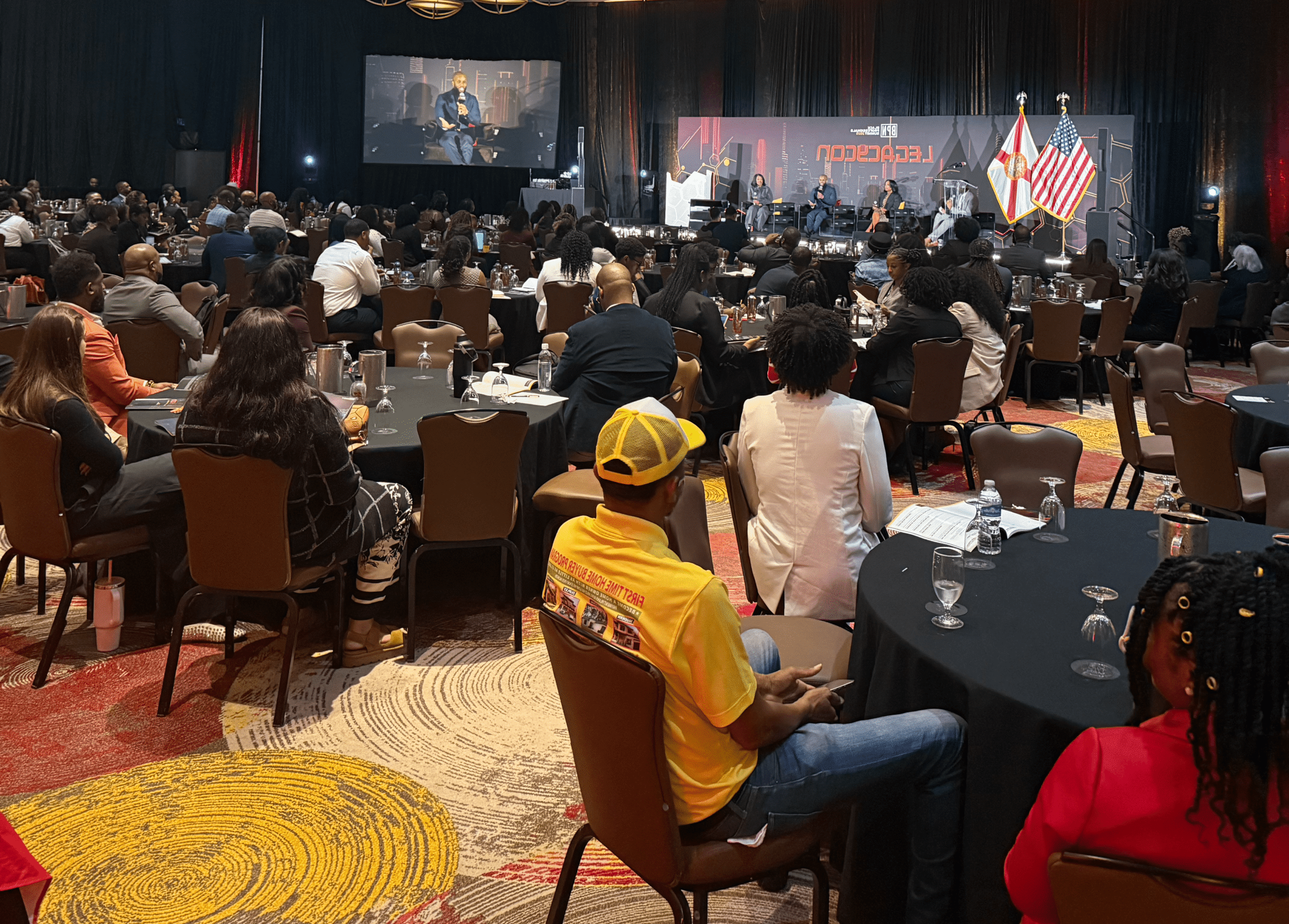
6. Community is a strategic advantage — not just a support system

For a period of time, I built in isolation.

And while that can create focus, it also creates blind spots.

Community changes that.

Not because it feels good — but because it sharpens you.

It puts you in proximity to:

  • different ways of thinking
  • different stages of growth
  • different approaches to the same problems

And that proximity matters.

Because building alone will only take you as far as your current perspective allows.

The right rooms will expand how you see what’s possible.

7. Faith is what carries you through the parts you can’t model out

Not everything in business is predictable.

There are decisions you will have to make where:

  • the data isn’t complete
  • the timing isn’t perfect
  • the outcome isn’t guaranteed

And in those moments, you don’t rely on certainty. You rely on alignment.

Faith, for me, has never meant ignoring reality. It means continuing to move with intention even when the full picture isn’t visible yet.

Because if you wait until everything makes sense, you’ll stay still.

What 7 Years Really Taught Me

If I had to summarize it:

  • You are always deciding who you are, whether you realize it or not
  • Your standards will either protect you or cost you
  • The way you build early shows up later
  • You don’t need to know everything — but you do need to move
  • And who you surround yourself with will shape how far you go

This isn’t a theory.
This is what has held up.

Where Strategy Meets Real Growth

If you’re building, leading, or figuring it out in real time, we share insights like this every week.

Frequently Asked Questions

Building a business long term teaches you how to make decisions with incomplete information, operate with consistency, and prioritize integrity over short-term wins. The most important lessons often center around identity, discipline, and the ability to adapt without losing direction.
Consistency comes from systems, not motivation. As a business grows, maintaining structure in operations, communication, and decision-making helps ensure that performance doesn’t rely on energy alone. Discipline and clear standards create sustainability.

Mentorship accelerates growth by providing access to experience, pattern recognition, and strategic thinking that would otherwise take years to develop independently. It helps founders avoid common mistakes and make more informed decisions.

Early-stage entrepreneurs often face uncertainty, inconsistent revenue, and the pressure of making critical decisions without full clarity. They also navigate building systems, finding the right clients, and balancing growth with operational stability.

Building a sustainable business requires strong foundational decisions around identity, systems, and standards. Long-term success comes from aligning strategy with execution, maintaining integrity, and continuously refining operations as the business grows.

Recent Posts